
Geomagnetic Reversals
About
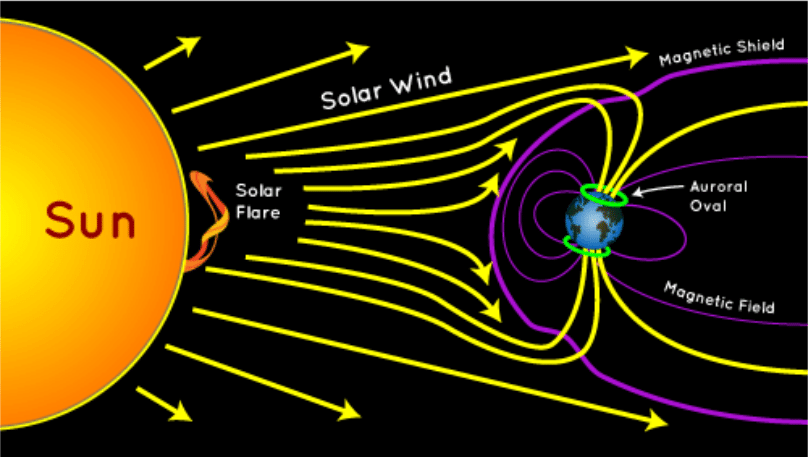
- Earth’s magnetic field is generated by the movement of molten iron in the outer core, creating a geodynamo that acts as a protective shield against harmful cosmic rays and solar wind.
- But this magnetic field isn’t stable forever—it flips, sometimes entirely, and sometimes only temporarily.
- There are two types of polarity changes:
- Geomagnetic Reversal: A complete flip of the magnetic poles that lasts for hundreds of thousands of years.
- Geomagnetic Excursion: A short-term, partial reversal where the poles wander but eventually return to their original positions.
- In the last 83 million years, Earth has undergone at least 183 full geomagnetic reversals and many more excursions.
- Excursions are 10 times more frequent than full reversals and can cause significant weakening of the magnetic field.
Impacts of Geomagnetic reversals
- Though magnetic field flips can allow more cosmic radiation to reach Earth, their real-world biological and climatic impacts remain unclear.
- During the Laschamps Excursion, ozone thinning and increased auroral activity were likely, but there is no direct evidence of mass extinction or evolutionary disruption.
- The Laschamps Excursion was a brief geomagnetic reversal that occurred around 41,000 years ago, during which Earth’s magnetic field weakened significantly and the magnetic poles temporarily flipped before returning to their original positions.
- The idea that magnetic reversals could trigger events like climate change or species loss is still debated.

Subscribe
Login
0 Comments
Oldest