
Sacred Groves
About
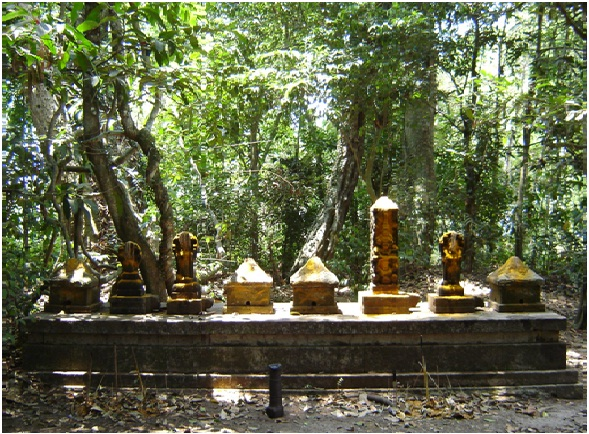
- Sacred groves are clusters of trees which are protected and sustained by the local communities because of their cultural and spiritual significance.
- It usually consists of a dense cover of vegetation including climbers, herbs, shrubs and trees, with the presence of a village deity and is mostly situated near a perennial water source.
- Sacred groves are considered to be symbols of the primitive practice of nature worship and support nature conservation to a great extent.
- Sacred Groves have been legally protected under the Community Reserves in the Wildlife (Protection) Amendment act, 2002.
| Community Reserves can be declared by the State Government in any private or community land, not comprised within a National Park, Sanctuary or a Conservation Reserve, where an individual or a community has volunteered to conserve wildlife and its habitat. |
- The sacred groves are known by diverse names across different regions: Devban in Himachal Pradesh, Devarakadu in Karnataka, Kavu in Kerala, Sarna in Madhya Pradesh, Oran in Rajasthan, Devrai in Maharashtra, Umanglai in Manipur, Law Kyntang/Law Lyngdoh in Meghalaya, Devan/Deobhumi in Uttarakhand, Gramthan in West Bengal, and Pavithravana in Andhra Pradesh.
Why in News?
- Tribals who lived in the Similipal Tiger Reserve (STR) in Odisha for generations before their relocation say their rights to continue their age-old rituals and worship of their deities in the sacred groves in the forest have been denied for the first time.

Subscribe
Login
0 Comments
Oldest